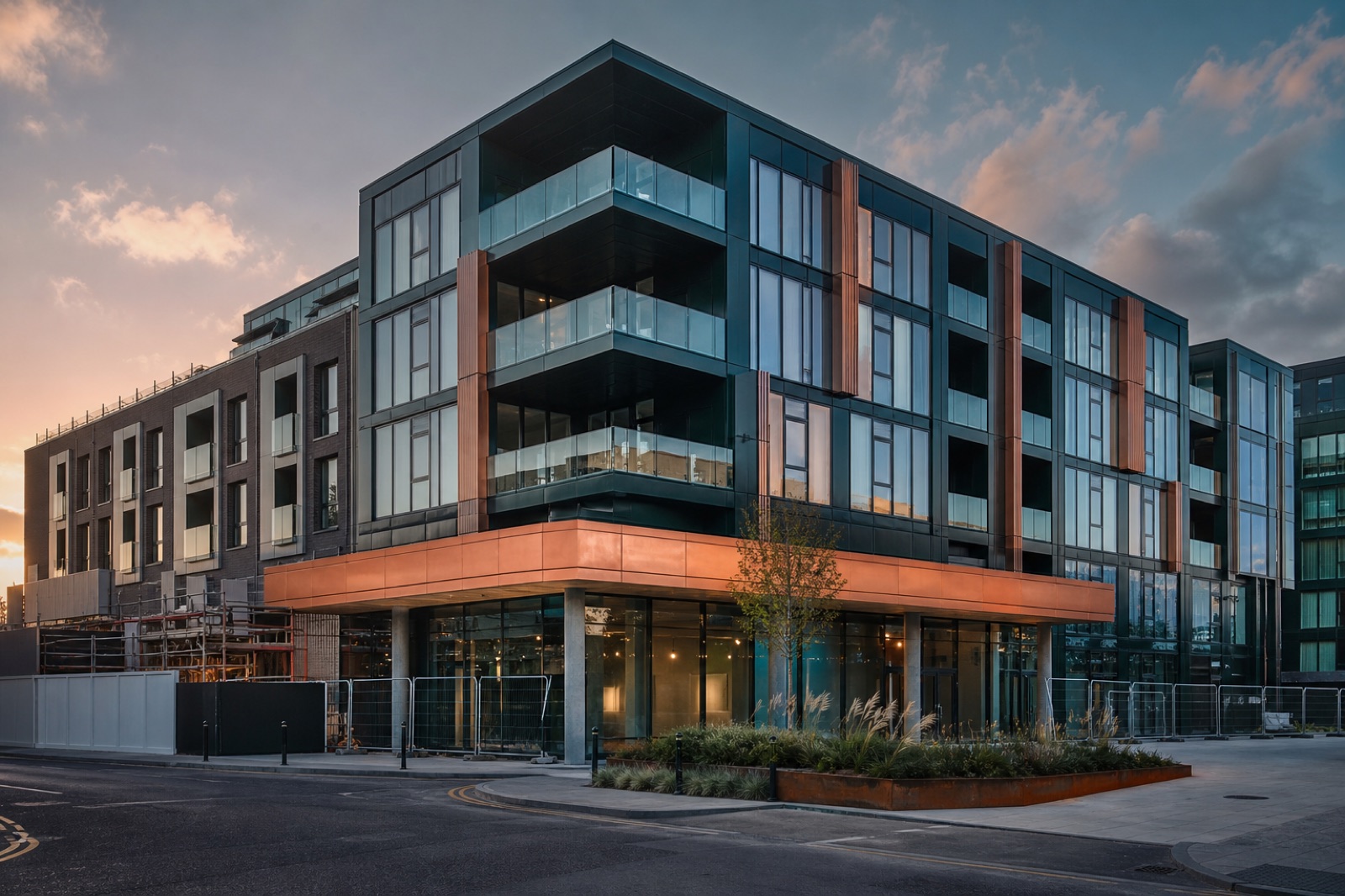
Stabilisation finance across the window
The structures we arrange to carry a completed, refurbished or recently let asset through lease-up to stabilised income and a clean exit, used alone or together.
We arrange finance across the full stabilisation window. A development exit facility repays a development loan at practical completion and lowers the cost of capital. A stabilisation bridge funds a completed scheme through lease-up to mature occupancy. Lease-up and bridge-to-term finance carries the asset to the point a term lender refinances it on stabilised income. A cash-out refinance releases equity once it revalues. A senior investment term loan is the long-term take-out. Mezzanine and preferred equity fill the gap between senior debt and the sponsor's cash. We model the right structure, set the exit, run it across our lender panel, and place the facility that fits the asset, the income plan and the timeline.
Stabilisation bridge finance
The short-dated debt that carries a newly built or recently completed property from practical completion, through lease-up and the income ramp, to the stabilised income a long-term lender wants. We arrange and place stabilisation finance with the lenders that fund the gap between a finished building and a fully let one.
Learn moreDevelopment exit finance
The facility that repays a development loan at practical completion, lowers the cost of capital and gives a finished scheme time to let or sell. Development exit finance replaces construction-priced debt with cheaper money once the build risk is gone, and removes the pressure of a maturing development loan while the units are marketed or stabilised.
Learn moreBridge-to-term finance
The structure that carries an asset from where it is now to the point a term lender will refinance it on stabilised income. A bridge-to-term facility is short-dated debt with the long-term exit lined up from the outset, so the bridge and the term loan are arranged as one plan rather than two disconnected deals.
Learn moreLease-up finance
The facility that funds a completed scheme through its lease-up period, from low day-one occupancy to the stabilised income a long-term lender wants. Lease-up finance is sized on the income ramp rather than today's part-let position, so a newly opened asset is not starved of debt while it fills.
Learn moreCash-out refinance
The refinance that releases equity once an asset stabilises and revalues upward. A cash-out refinance replaces the existing facility with a larger term loan sized on the asset's stabilised income and higher value, returning the uplift in equity to the owner as cash to redeploy.
Learn moreSenior investment term loans
The long-term take-out on a stabilised, income-producing commercial property: the senior term loan or commercial investment mortgage that holds the asset once it is let and trading. Sized on the rental income it produces and the interest cover that income provides, it is the cheapest, longest money in the stabilisation lifecycle.
Learn moreMezzanine and preferred equity
The layer that sits behind senior debt and in front of the developer's own equity, bridging the gap between what the senior lender will advance and the total cost of a scheme. Mezzanine finance and preferred equity lift total leverage and reduce the cash a developer has to commit, in exchange for a higher return to the mezzanine provider.
Learn moreRefurbishment-to-stabilisation finance
The structure that funds a heavy refurbishment or repositioning and then carries the finished asset through lease-up to stabilised income. Refurbishment-to-stabilisation finance covers the works in stages, then the income ramp, so a tired or empty building is taken from acquisition through repositioning to a stabilised, financeable asset on a single coordinated plan.
Learn moreNot sure which finance fits?
Send us the scheme and the operator and we will tell you what is fundable and how best to structure it.